How Tom Henry Beat the Polygraph

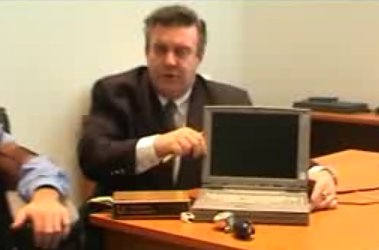
In an oral history posted on YouTube, musician Tom Henry recounts the story of how, as a young Navy seaman, he was caught with a pound of marijuana in his locker, but escaped punishment after fooling the lie detector: The technique Tom thought of for fooling the lie detector (dissociation) wasn’t very sophisticated. But it … Read more

Nemesysco Controversy Roundup

Israeli lie detector company Nemesysco has issued a press release responding to  Professors Anders Eriksson and Francisco Lacerda’s article, “Charlatanry in Speech Science: A Problem to Be Taken Seriously,” which laid bare in devastating detail the pseudoscientific nature of Nemesysco’s lie detection “technology.” It should be noted that Nemesysco’s press release opens with a misleading characterization of Erksson & Lacerda’s article:

We wish to clarify our position with regard to the so-called ‘scientific research’ written by Professors Lacerda and Eriksson and published in the International Journal of Speech, Language and the Law in December 2007, but later withdrawn.

In fact, the article has not been withdrawn, rescinded, or otherwise disavowed by the journal that published it. Rather, the publisher (rather cravenly, in our opinion) withdrew the on-line availability of the article in response to legal threats from Nemesysco’s lawyers. For background, including part of the correspondence between Nemesysco and the publisher, see Nemesysco Founder Amir Liberman Is a Charlatan on this blog.

The “Ministry of Truth” blog, which has been following the  saga particularly as it pertains to the use of Nemesysco’s lie detection software in the United Kingdom (where it is marketed as “Voice Risk Analysis”), provides a point-by-point critique of Nemesysco’s press release.

See also Professor Lacerda’s 12 March 2009 blog entry, LVA-technology and Nemesysco’s official statement, in which he responds to an earlier released statement by Nemesysco in response to his and Professor Eriksson’s article.

Read more

Admission of fMRI Lie Detector “Evidence” Sought

Alexis Madrigal writes for Wired.com about what is reportedly the first attempt to have fMRI lie detector results admitted in court: Defense attorneys are for the first time submitting a controversial next-generation lie-detection test as evidence in criminal court. In an upcoming juvenile-sex-abuse case in San Diego, the defense is hoping to get an fMRI … Read more

Baker DVSA Loses a Customer

Dee J. Hall reports for the Wisconson State Journal that “Dr.” E. Gary Baker, the faux Ph.D. who markets what he styles a “Digital Voice Stress Analyzer” to law enforcement agencies, has lost the Jefferson, Wisconsin Police Department as a customer:

Jefferson police cancel training on voice-stress analyzer
By DEE J. HALL
608-2523-6132
dhall@madison.com

The city of Jefferson Police Department has cancelled a training session on how to use a controversial voice-stress analyzer after the Wisconsin State Journal raised questions about the technology and the qualifications of the business owner scheduled to conduct the training.

Voice-stress analysis is used by some law enforcement agencies in Wisconsin, including the Jefferson County Sheriff’s Office, to detect “microtremors” in the voice that backers of the technology say indicates speakers are stressed and therefore answering questions deceptively.

“If everything has been exhausted in investigative techniques and they have a suspect or someone they want to eliminate as a suspect, it (CVSA) has been used,” Madson said, adding that the technology has prompted confessions from suspects. “The tool works, as far as I’m concerned.”

Detective Sergeant Tim Madson is badly misinformed. The existing peer reviewed research suggests that voice stress analyzers perform at roughly chance levels of accuracy. While these devices might be useful for scaring confessions out of naive and gullible persons, they have no scientific basis and are no more to be relied upon than a colander wired to a photocopier with a sheet of paper saying “He’s Lying” on the glass paten.

Read more

DHS Seeks Smell-Based Lie Detector

You’ve heard of the polygraph. Now the US Government is seeking to develop a “smellograph.” UPI Homeland and National Security Editor Shaun Waterman reports that the Department of Homeland Security is funding a “proof of concept” study into whether odors emitted by the human body can be used to determine whether a person is lying: … Read more

Nemesysco Founder Amir Liberman Is a Charlatan

Nemesysco founder Amir Liberman

Amir Liberman, the founder of Nemesysco, an Israeli company that internationally markets voice based lie detectors that simply don’t work, successfully pressured an academic journal into withdrawing the Internet availability of a peer-reviewed article that exposes Liberman’s lie detection “technology” for the pseudoscientific flapdoodle that it is.

The Article

Swedish linguists Anders Eriksson and Francisco Lacerda co-authored an article titled “Charlatanry in Speech Science: A Problem to Be Taken Seriously” that was published in the International Journal of Speech, Language and the Law (vol. 14, no. 2 [2007]). Eriksson & Lacerda review several voice-based lie detectors, including Nemesysco’s “Layered Voice Analysis” (LVA) which the U.S. military’s Special Operations Command has purchased and the Los Angeles County Sheriff’s Department is considering adopting. A variant of LVA customized for security checkpoints has reportedly been trialled at Moscow’s Domodedovo International Airport.

Anders Eriksson and Francisco Lacerda

Eriksson & Lacerda point out that so-called “thorns” and “plateaus” — characteristics of digitized voice recordings that Nemesysco claims reflect emotional states — are merely artifacts produced by the digitization process! With regard to the LVA software, Eriksson & Lacerda note:

Contrary to the claims of sophistication — ‘The LVA software claims to be based on 8,000 mathematical algorithms applied to 129 voice frequencies’ (Damphousse et al. 2007: 15) — the LVA is a very simple program written in Visual Basic. The entire program code, published in the patent documents (Liberman 2003) comprises no more than 500 lines of code. It has to be said, though, that in order for it not to be possible to copy and run the program as is, some technical details like variable declarations are omitted, but the complete program is unlikely to comprise more than 800 or so lines. With respect to its alleged mathematical sophistication, there is really nothing in the program that requires any mathematical insights beyond very basic secondary school mathematics. To be sure, recursive filters and neural networks are also based on elementary mathematical operations but the crucial difference is that these operations are used in theoretically coherent systems, in contrast to the seemingly ad hoc implementation of LVA.

Read more

Penn & Teller Bullshit! Lie Detector Episode

As has been discussed on the message board, Penn Jillette, the “bigger, louder half” of the magic and comedy duo Penn & Teller, has disclosed via Twitter that a forthcoming episode of the Emmy Award-winning Showtime series Penn & Teller Bullshit! will concern “the bullshit of lie detectors.” AntiPolygraph.org anticipates that this PTBS episode will … Read more

Texas Department of Public Safety Brouhaha Over Polygraph Policy

Mike Ward, staff reporter for the Austin American-Statesman reports that — much to the horror of the state’s Public Safety Commission — the Texas Department of Public Safety has hired applicants who failed lie detector tests. Unfortunately, left out of the report is any mention of the fact that polygraphy has no scientific basis. The proper question is not why are applicants who failed this bogus test being hired, but why is the state of Texas relying on this pseudoscience to screen applicants?

Ward reports:

Some Texas Department of Public Safety troopers have been hired despite failing polygraph tests on their background checks, while others have been hired after admitting to past criminal behavior, agency officials said Thursday.

With legislative pressure already on DPS officials to ensure that state troopers meet the highest standards, officials made a number of disclosures at a meeting Thursday with the Public Safety Commission, which oversees the department.

Some members of the current training academy class of more than 100 failed polygraph tests on background checks. Others who failed polygraphs have been hired in the past.

Some recruits in the past were accepted after they admitted to past criminal behavior during interviews, even if they were never arrested or charged.

“More than a handful” were rejected by other law enforcement agencies before they applied to the DPS.

Others have been promoted from the training academy and put to work despite recommendations from training supervisors that they be dismissed.

“Wow!” said Commissioner Ada Brown of Dallas, after hearing the details at the meeting.

Despite some recruits’ deception on the polygraph tests, “you give him a badge?” she asked Capt. Phillip Ayala, who was in charge of recruiting, and human resources director Paula Logan. “I have a problem with that.”

Read more

Massachusetts Police Face Polygraph Dragnet

Although pre-employment polygraph screening of law enforcement officers is prohibited by law in the state of Massachusetts, such protection against the pseudoscience of polygraphy evidently ceases upon hiring. In the town of Dracut, some 40 police officers either have been polygraphed or face polygraphic interrogation regarding the disappearance in 2003 of a quantity of marijuana … Read more

Controversial Justice Department Lawyer Pooh-Poohs Presidential Polygraph Prohibition

With less than a week remaining before President George W. Bush leaves office, controversial Principal Deputy Assistant Attorney General Steven G. Bradbury on Wednesday, 14 January 2009 issued a legal opinion finding that a memorandum from President Lyndon B. Johnson to the heads of departments and agencies prohibiting use of the polygraph in the Executive … Read more