Customs and Border Protection Polygraph Screening: A Critical Commentary on the Center for Investigative Journalism’s Recent Reporting

On 4 April 2013, the Center for Investigative Reporting published two articles by Andrew Becker on U.S. Customs and Border Patrol’s pre-employment polygraph screening program. The first, which has garnered considerable attention and was featured on Tina Brown’s The Daily Beast, is “During polygraphs, border agency applicants admit to rape, kidnapping.”1 Becker’s reporting is based primarily on an internal report by CBP’s polygraph unit (formally titled the Credibility Assessment Division). This document, first obtained by the Center for Investigative Reporting, is available on AntiPolygraph.org as a word-searchable PDF file. Becker opens the article:

One [CBP applicant] admitted to kidnapping and ransoming hostages in the Ivory Coast. Others said they had molested children or committed rape. And one, as he prepared for survival in a post-apocalyptic world, contemplated assassinating President Barack Obama.

These are among the thousands of applicants who have sought sensitive law enforcement jobs in recent years with the U.S. Border Patrol and its parent agency, Customs and Border Protection.

In many cases, these people made it all the way through the hiring process until one of the last steps – a polygraph exam. Once sitting with a polygraph examiner, they admitted to a host of astonishing crimes, according to documents obtained by the Center for Investigative Reporting.

The records – official summaries of more than 200 polygraph admissions – raise alarms about the thousands of employees Customs and Border Protection has hired over the past six years before it began mandatory polygraph tests for all applicants six months ago. The required polygraphs come at the tail end of a massive hiring surge that began in 2006 and eventually added 17,000 employees, helping to make the agency the largest law enforcement operation in the country.

Read more

  1. The Daily Beast ran with the less sensationalist title, “On Polygraph Tests, Would Be Border Patrol Agents Confess to Crimes” []

Can Polygraphs Really Keep Racists Out of Law Enforcement?

Shane Sullivan
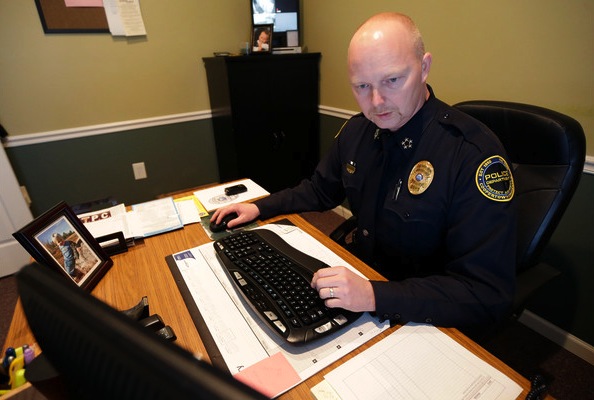
Coopertown, TN police chief Shane Sullivan

News organizations across America yesterday carried an Associated Press story about how the police chief of a small town in Tennessee was using polygraphs to “weed out racists” from the hiring process:

Police Chief’s Polygraph Targets Racist Applicants

By SHEILA BURKE Associated Press
COOPERTOWN, Tenn. March 8, 2013 (AP)

A police chief hired to rebuild a tiny Tennessee department dismantled by scandal is using a lie-detector test to keep racists off his force.

Coopertown Police Chief Shane Sullivan took over the department in November, becoming the 11th chief in as many years. He was hired on the heels of a series of police scandals that for a few months left Coopertown with no police at all. Years before that, a mayor was voted out of office after the local prosecutor accused him of racism and running a notorious speed trap.

Law enforcement experts say Sullivan’s polygraph approach is unusual, though some departments use the devices for other purposes during the application process. Others try to root out bias in other ways. One polygraph expert warned that lie detectors can’t accurately predict racism for reasons that include people’s inability to recognize their own racism.

Sullivan said he doubts racists will even apply for the force if they know about the tests.

“I think the polygraph will definitely keep these people from applying,” the 39-year-old chief said.

And he believes the policy is working, because he says it’s already discouraged some applicants. “I’ve told a couple of ones about the polygraph who have not called me back.”

The fact that an applicant didn’t call back after being told about the polygraph requirement doesn’t necessarily mean that the applicant was a racist afraid of being caught by the lie detector. In fact, that is very unlikely to be the case. As the article goes on to explain, the polygraph question is not whether one holds racist attitudes, but whether one has committed a hate  or race-based crime. Presumably, very few law enforcement applicants, even those with strong racial biases, have committed such crimes. It’s quite possible that the applicants lost interest for other reasons, such as low pay and poor career prospects with the tiny, trouble-plagued department.

Read more

Russia Today on Polygraph Screening in the United States

Marina Portnaya of Russia Today (RT) reports on polygraph screening by the federal government of the United States. Those interviewed include retired CIA polygraph examiner John Sullivan, McClatchy reporter Marisa Taylor, and Professor Stephen Fienberg, who headed the National Research Council’s Committee to Review the Scientific Evidence on the Polygraph: https://www.youtube.com/watch?v=Ycd0TQv-zkA Ironically, the Russian interior … Read more

Obama Administration Blows Off Criticism of Polygraph Screening

  Marisa Taylor of McClatchy Newspapers reports that Director of National Intelligence James Clapper is drafting a new national policy on polygraph screening. Excerpt: WASHINGTON — The Obama administration is drawing up a new national polygraph policy in the wake of allegations that federal agencies are pushing legal and ethical limits during screenings of job … Read more

McClatchy Investigative Series on Polygraph Screening

McClatchy Newspapers investigative reporter Marisa Taylor has published a new series of well-researched articles on federal polygraph screening programs: Feds expand polygraph screening, often seeking intimate facts As polygraph screening flourishes, critics say oversight abandoned Federal polygraph programs are secret even to researchers U.S. polygraphers questioned accuracy of tests on detainees overseas Apart from numerous … Read more

Chris French on Polygraph Screening of Sex Offenders

Professor of psychology Chris French writes for the Guardian on why mandatory polygraph screening of convicted sex offenders is a bad public policy choice. Excerpt: It is clear that offenders only have to spend five minutes on Google to realise that experts generally agree that polygraph testing is in fact not a reliable technique for … Read more

Tom Chivers on Lie Detectors

In “The Awkward Truth About Lie Detectors,” Tom Chivers of The Telegraph comments on the growing use of lie detectors to screen sex offenders in the United Kingdom. The money quote: Polygraphy relies on suspects believing that lie detectors work, which in turn relies on them not knowing how to use Google (or reading this article).

Sen. Grassley Calls for DoD IG Inspection of NRO Polygraph Program

In a follow-up to her excellent investigative series on polygraph practices within the National Reconnaissance Office, McClatchy reporter Marisa Taylor writes that Senator Charles Grassley (R-IA) thinks that the DoD inspector general should investigate whether NRO is in compliance with DoD polygraph regulations: WASHINGTON — Pentagon officials are scrambling to look into allegations of abusive … Read more

Senate Intelligence Committee Invites Increased Polygraph Screening

As noted by Steven Aftergood of the Federation of American Scientists’ Project on Government Secrecy, “the Senate Intelligence Committee’s markup of the 2013 intelligence authorization bill includes 12 provisions that are intended to combat unauthorized disclosures of classified information.” Among these provisions is a requirement that within 120 days of enactment, the Director of National … Read more