Rachel Dissell of the Cleveland Plain Dealer reports that Cuyahoga County Juvenile Court Judge Alison Floyd has ordered the victims in four sexual assault cases to submit to polygraph “testing.” In addition, Floyd has ordered the perpetrators of the assaults, who have already been found guilty, to submit to polygraph tests for sentencing purposes. It … Read more
AntiPolygraph.org has received a complementary copy of statistician Kaiser Fung’s new book, Numbers Rule Your World: The Hidden Influence of Probability and Statistics on Everything You Do (New York: McGraw Hill, 2010), a short primer on statistics written for a general audience. In Chapter 4, Fung addresses the trade-off between false positives and false negatives … Read more
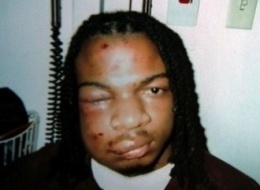
Three Pittsburgh police officers who stand accused of wantonly beating 18-year-old honor student Jordan Miles have all passed lie detector tests. But Miles also passed a lie detector test regarding the incident. So whose lie detector is lying?
Jill King Greenwood reports for the Pittsburgh Tribune-Review:
Three Pittsburgh police officers accused of beating a Homewood teenager during a January arrest near his home passed polygraph tests over the weekend, the president of the police union said.
Officers David Sisak, Richard Ewing and Michael Saldutte took the tests from a private polygraph administrator at the same time that nearly 100 other city officers marched in the St. Patrick’s Day Parade Downtown on Saturday wearing T-shirts in support of the three, who are on paid administrative leave while the city and FBI investigate the Jan. 12 incident.
On Thursday, 11 March 2010, in testimony before a subcommittee of the Senate Homeland Security Committee, it was disclosed that the failure rate associated with the U.S. Customs and Border Protection (CBP) pre-employment polygraph screening program stands at 60 percent. New York Times correspondent Randal C. Archibold reports, among other things: Polygraph examinations, which officials … Read more
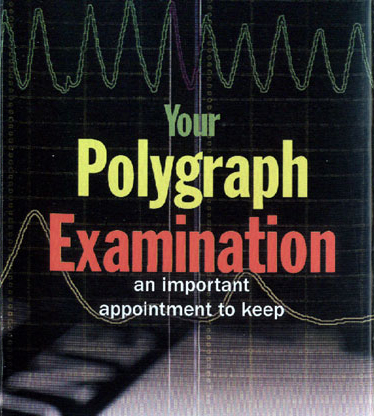
AntiPolygraph.org has obtained a copy of an NSA leaflet (1.7 mb PDF) titled, “Your Polygraph Examination: An Important Appointment to Keep.” This leaflet, which has blanks for filling in the time, date, and place of an appointment, merits some discussion.
The leaflet begins with a section on what to do before the polygraph:
Prior to Your Appointment
Get a good night’s sleep
Follow your usual routine
Take your regular medications
Don’t skip any meals
Come in with an open mind
It’s a unique experience each time
Allow enough time in your schedule
This much is fairly uncontroversial. But while the NSA urges keeping an “open mind” about the polygraph, we should also heed evolutionary biologist Richard Dawkins’ wise counsel: “By all means let’s be open-minded, but not so open-minded that our brains drop out.” The National Academy of Sciences in 2002 found polygraph screening to be completely invalid, concluding that “its accuracy in distinguishing actual or potential security violators from innocent test takers is insufficient to justify reliance on its use in employee security screening in federal agencies.”
An article published today in a small town newspaper provides a good example of the sort of shoddy reporting that perpetuates the myth of the lie detector. Lisa Rogers reports for the Gadsden, Alabama Times:
Polygraphs useful law enforcement tool
By Lisa Rogers
Times Staff Writer
Published: Saturday, March 6, 2010 at 9:37 p.m.
A suspect in a sex crime confessed after failing a lie detector test and even confessed to trying to beat the test by doing research on the Internet.
There are several Web sites that claim to have information that teaches someone how to beat a test, said Fred Lasseter, a licensed polygraph examiner and investigator with the Etowah County Sheriff’s Office.
“They tell you things to do to try to beat the system,” Lasseter said, “but beating it takes years of practice. It is very difficult to try to manipulate the system.”
Polygraph operator Fred Lasseter is lying. It doesn’t take “years of practice” to learn how to beat a lie detector test, nor is it difficult. In peer-reviewed research (cited in the bibliography of The Lie Behind the Lie Detector), about half of test subjects were able to fool the polygraph with no more than 30 minutes of training. The fact that a stupid criminal failed to pass a lie detector test and confessed should not be misconstrued as evidence that 1) the polygraph is difficult to beat or 2) that the polygraph is accurate as a lie detector. It is neither.
On Wednesday, 24 February 2010, Scott Horton of Antiwar Radio interviewed AntiPolygraph.org co-founder George Maschke about the polygraph examination of Dr. Bruce Ivins, the DoD microbiologist the FBI asserts was the sole perpetrator of the 2001 anthrax mailings. Ivins passed a polygraph screening test in 2002. The interview is now available on-line here.
On Friday, 19 February 2010, the U.S. Department of Justice announced the conclusion of its investigation into the 2001 anthrax attacks. The DOJ maintains that Dr. Bruce Edwards Ivans, who in 2002 passed a polygraph test regarding the anthrax attacks, was the sole perpetrator.
In an investigative summary (640 kb PDF), the DOJ characterizes Ivins’ passing of the polygraph as part of an effort to “stay ahead of the investigation,” alleging (at p. 84, fn. 51) that he used countermeasures to fool the polygraph:
In some sense, Dr. Ivins’s efforts to stay ahead of the investigation began much earlier. When he took a polygraph in connection with the investigation in 2002, the examiner determined that he passed. However, as the investigation began to hone in on Dr. Ivins and investigators learned that he had been prescribed a number of psychotropic medications at the time of the 2002 polygraph, investigators resubmitted his results to examiners at FBI Headquarters and the Department of Defense Polygraph Institute for a reassessment of the results in light of that new information. Both examiners who independently reassessed the results determined that Dr. Ivins exhibited “classic” signs of the use of countermeasures to pass a polygraph. At the time the polygraph was initially examined in 2002, not all examiners were trained to spot countermeasures, making the first analysis both understandable under the circumstances, and irrelevant to the subsequent conclusion that he used countermeasures.
Although the summary doesn’t state what “classic” signs of countermeasures Ivins allegedly displayed, Michael Isikoff of Newsweek reported in 2008 that the FBI “concluded he’d used ‘countermeasures’ such as controlled breathing to fool the examiners.”
A recently filed federal lawsuit documents how a veteran intelligence officer with the Defense Intelligence Agency (DIA) was accused of espionage and summarily fired after failing a series of polygraph “tests” (a procedure roundly rejected by scientists as being without scientific basis). The following is an excerpt from the statement of complaint (160 kb PDF) … Read more
Scott Horton of Antiwar Radio interviewed AntiPolygraph.org co-founder George Maschke on Wednesday, 30 December 2009. The opening part of the interview concerns a non-polygraph related topic–a document published by The Times of London purportedly from an Iranian nuclear weapons research project. For more on this, see “Typography Casts Additional Doubt on Authenticity of Alleged Iranian … Read more