Defense Intelligence Agency documents (40 MB .zip archive) obtained by AntiPolygraph.org suggest that the agency lacks the ability to detect sophisticated polygraph countermeasures1 and that spies, saboteurs, and terrorists will have little difficulty deceiving its polygraph operators using techniques such as those described in AntiPolygraph.org’s free book, The Lie Behind the Lie Detector (1 MB PDF) or in Doug Williams‘ manual, How to Sting the Polygraph. The U.S. Government is so concerned about the effectiveness of such techniques that it has targeted Doug Williams for criminal prosecution and may have attempted to entrap AntiPolygraph.org co-founder George Maschke.
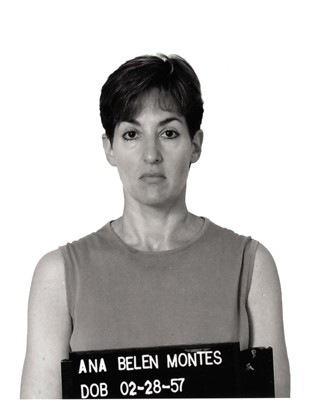
It should be noted that the DIA polygraph screening program has never caught a spy. In 2001, the DIA’s senior analyst for Cuban affairs, Ana Belen Montes, was arrested, charged, and ultimately convicted of spying for Cuba. She had in fact been acting as a Cuban agent from the very beginning of her DIA employment: she had been trained by Cuban intelligence how to fool the polygraph, and she succeeded in doing precisely that throughout her DIA career.
A 2006 Senate Select Committee on Intelligence report documents the fact that three fabricators with Ahmed Chalabi’s Iraqi National Congress also passed DIA lie detector tests.
Despite these monumental failures of the polygraph, and in utter disregard of the National Research Council’s conclusion that “[polygraph testing’s] accuracy in distinguishing actual or potential security violators from innocent test takers is insufficient to justify reliance on its use in employee security screening in federal agencies,” the DIA has in recent years moved to expand and outsource its polygraph screening program.2
The documents provided to AntiPolygraph.org consist of 18 sequentially numbered “confirmed countermeasure” case files involving 17 examinees (one was polygraphed twice) from late 2013. Confirmed countermeasure cases are those in which the examinee has admitted to doing something in an attempt to manipulate the outcome. Federal agencies routinely forward such case files, stripped of the examinee’s identity, to the federal polygraph school, the National Center for Credibility Assessment (NCCA), at Fort Jackson, South Carolina, for study purposes.
Countermeasure admissions, when they occur, typically result from an accusation by the examiner followed by interrogation in an attempt to elicit an admission. Countermeasure admissions are rare and are a feather in the cap for polygraph examiners, who are typically rated based on the admission rates they obtain. By examining the polygraph charts from these representative cases, we can infer what activity by an examinee is likely to arouse the examiner’s suspicions, leading to an accusation of countermeasure use (and ultimately, perhaps, an admission).
We will analyze each case in turn, but the bottom line is that the key tip-offs that lead to countermeasure accusations appear to be 1) physical movement that shows up on the seat and/or foot pad tracings and 2) deep breathing. Neither of these are techniques that any knowledgeable spy, terrorist, or saboteur would employ. Nor are they consistent with the techniques for passing the polygraph documented in The Lie Behind the Lie Detector and How to Sting the Polygraph.
Instead, the countermeasure attempts that DIA polygraphers are “detecting” are so-called “spontaneous countermeasures” (attempts to influence polygraph outcomes with little or no forethought or planning). Moreover, none of these confirmed countermeasure cases appear to involve anyone who has actually committed an act of espionage, sabotage, or terrorism. Indeed, it appears, based on the sorry state of countermeasure “detection,” that the DIA polygraph unit has little prospect of ever unmasking a genuine spy, terrorist, or saboteur.
Moreover, because DIA polygraph examiners receive their training at the same school as do all other federal polygraphers (NCCA), it is likely that DIA’s shortcomings in polygraph countermeasure detection also beset other federal agencies.
A case-by-case analysis of the files follows. To follow along, download and extract the archive (40 MB .zip file). In it, you will find 18 folders, each with a sequential serial number (from #26 to #43) that includes the date the examination was conducted and (in all but one case) the examiner’s initials. Each folder contains the data associated with the examination, which is readable using the Lafayette Instrument Company‘s LXSoftware. In addition, you’ll find a Microsoft Word document with a brief description of the case, and a folder titled “Documents” which contains a PDF file for each polygraph chart collection associated with the examination. Each PDF chart file includes at the end a list of the actual questions asked.
- In this context, “sophisticated” doesn’t mean that the countermeasures are complicated or difficult to learn. They’re not. It simply means that they are the kind of countermeasure that a subject with knowledge of polygraph procedure–and its vulnerabilities–would choose to employ. Polygraph subjects are not supposed to know about polygraph methodology, in particular, the true function of the so-called “control” or comparison questions. [↩]
- A contributor to the AntiPolygraph.org message board has recently alleged, with documentation, that “[s]ince March 2010, The Defense Intelligence Agency’s (DIA) Chief of Credibility Assessment, Brett Stern, has spent over 40 million dollars of US Tax Payer money funding a polygraph contractor…whose institution in addition to their entire current management team…have each been [civilly] charged with committing numerous counts of financial fraud….” [↩]