Polygraph Dragnet Planned in Clayton County, Georgia Sheriff’s Office

June 29th, 2010 AntiPolygraph.org No comments
Kem Kimbrough

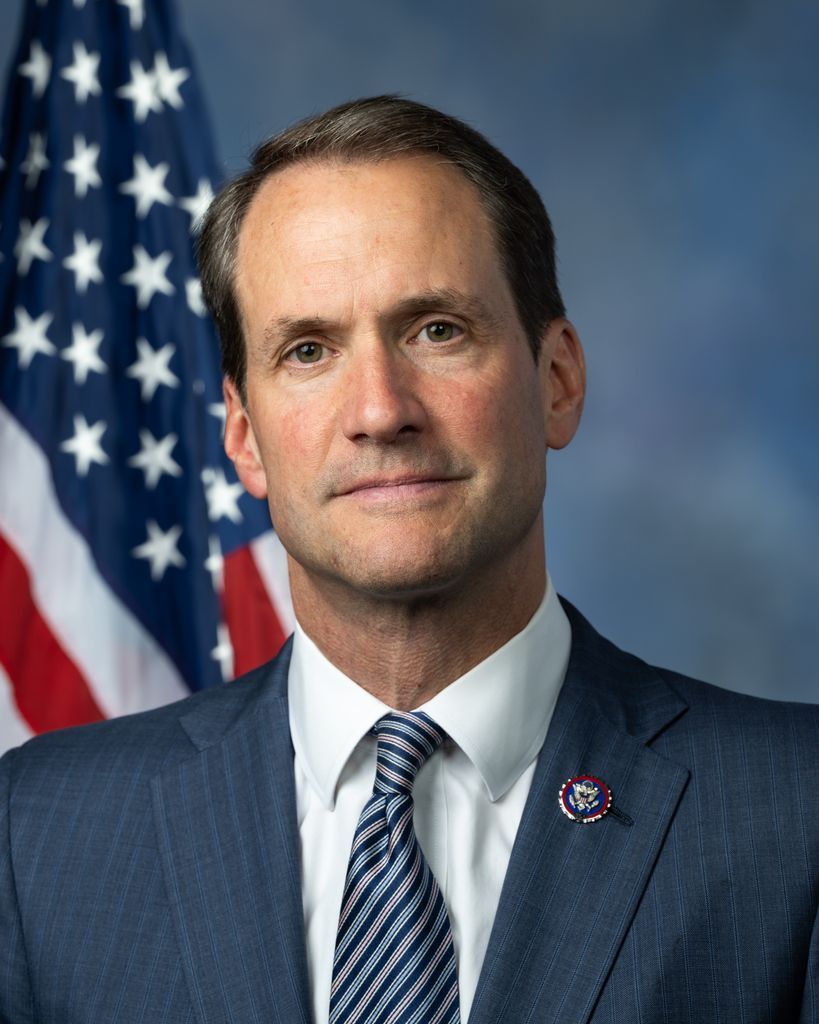
Clayton County, Georgia Sheriff Kem Kimbrough

Kevin Rowson of WXIA television news in Atlanta reports on Clayton County sheriff Kemuel “Kem” Kimbrough’s plans to subject 40-50 employees to polygraph screening in an attempt to determine who anonymously e-mailed reporters a complaint about work conditions in the department:

CLAYTON COUNTY, GA — Clayton County Sheriff deputies are being asked to take a polygraph test because the Sheriff wants to find out who is talking to the media.

Sheriff Kem Kimbrough said he’s trying to get to the bottom of a problem at his jail. It stems from an email sent to the media that claims a number of problems at the county’s jail.

The email contends that the jail has a number of problems, including a water outage, and officer safety “after recent riots at the jail.”

The email quoted a source who said that morale is at an all time low and employees are frustrated that no one will air their concerns.

Sheriff Kimbrough said “Morale for bad employees is at an all time low because I’m rooting them out one by one.”

Forcing 40-50 employees to submit to the indignity of polygraph “testing”–a thoroughly discredited procedure that has no scientific basis–is unlikely to improve morale.

The email referred to recent riots at the jail. Sheriff Kimbrough said there have been no riots. “I told them I don’t mind you calling the media, I don’t mind you talking to people so long as you tell the truth,” he said.

The Sheriff is going to give polygraph tests to about forty or fifty employees who worked the shift when, what he called “the lies”, were leaked to the media. “Since I know that I’ve got some liars in the midst we’re going to investigate to see whose telling those lies,” Sheriff Kimbrough said. “If we catch you telling the lie then that’s something that always has been punishable by termination.”

But if someone “fails” a polygraph “test,” it doesn’t mean that they have been “caught” telling a lie. Polygraphy is sheer pseudoscience, and it is inherently biased against the truthful, yet easily passed by liars using simple countermeasures, as explained in AntiPolygraph.org’s free book, The Lie Behind the Lie Detector (1 mb PDF). Clayton County Sheriff’s Office personnel ordered to submit to polygraphic interrogation may wish to read it.

The email, sent from an anonymous account, said “Deputies of the Clayton County Sheriff’s Office are expressing concern over threats of termination.”

The Sheriff said he believes it’s only about six employees behind the email who were holdovers from the past administration of former Sheriff Victor Hill. “They had it good,” Sheriff Kimbrough said. “They weren’t doing any work, they were living the high life off the county dime and now I put them to work.”

The Sheriff said time and money are not an issue with his investigation because he has an internal affairs section that will handle it. He said he also has a polygraph expert on staff.

It looks as if Sheriff Kimbrough already has suspects in mind. No doubt his polygraph expert will know which employees the sheriff suspects. It would not be surprising if the very employees Kimbrough suspects happen to “fail” the polygraph. In a famous experiment set up by CBS 60 Minutes, four different polygraph operators found four different employees of Popular Photography magazine guilty of having stolen camera equipment. Each polygrapher had been told in advance that a different employee was the likely culprit. And in each case, it was the employee who had been fingered as a suspect who “failed.” In fact, no camera had been stolen.

Categories: Polygraph Tags:

The Truth About the Polygraph (According to the NSA)

June 13th, 2010 AntiPolygraph.org No comments

The National Security Agency (NSA) has produced a video about its polygraph screening program. Watch it here, along with AntiPolygraph.org’s commentary:

The original source video is available here. For commentary on the NSA’s accompanying polygraph leaflet, see our earlier blog post, NSA Leaflet: Your Polygraph Examination.

For a thorough debunking of polygraphy, with extensive citations (including the U.S. Government’s own polygraph literature) that you may check for yourself, see AntiPolygraph.org’s free book, The Lie Behind the Lie Detector (1 mb PDF).

See also these public statements by individuals who have gone through the NSA polygraph process:

And for discussion of polygraph matters, see the AntiPolygraph.org message board.

Polygraph Operator Sally VanBeek Doesn’t Think Sociopaths Can Beat the Lie Detector

March 28th, 2010 AntiPolygraph.org 1 comment

The Seattle Post-Intelligencer’s Seattle 911 blog today featured a video report by Parella Lewis of KCPQ-TV’s Washington’s Most Wanted show. Lewis interviewed Detective Sally VanBeek, a polygraph operator with the Everett Police Department, who opined that sociopaths cannot beat the polygraph.

Is VanBeek, who is also president of the Northwest Polygraph Examiners Association, somehow unaware that Gary Leon Ridgway of King County, Washington, one of the most prolific serial killers in American history, passed a polygraph test and continued his killing spree? What about Charles Cullen, the “Angel of Death” who passed a polygraph and went on to kill dozens?

And just last week, a New Jersey man was arrested for the killing of five teenagers in 1978. He had been wrongly cleared as a suspect because he passed a polygraph test.

Parella Lewis’ credulous reporting is a good example of the puff journalism that perpetuates the myth of the lie detector in American popular culture.

Watch the video below and see the Seattle 911 blog post for critical commentary by readers:

Lee Anthony Evans, Cleared As Suspect by Polygraph, Arrested for 1978 Murders

March 23rd, 2010 AntiPolygraph.org No comments

WCBS TV reports that Lee Evans, an early suspect in the 1978 disappearance of five Newark, New Jersey teenagers, has been arrested for their murder along with another as-yet-unidentified man. The Associated Press reports that Evans had earlier been eliminated as a suspect after passing a polygraph test:

The boys, Melvin Pittman and Ernest Taylor, who were both 17, and Alvin Turner, Randy Johnson, and Michael McDowell, who were all 16, were last seen on a busy street near a park where they had played basketball on Aug. 20, 1978. They were with a carpenter, Lee Evans, who routinely hired teens to help him with odd jobs, police have said.

Evans told police at the time that he dropped off the boys on a street corner near an ice cream parlor. Later that night, Michael McDowell returned home and changed clothes, then returned to a waiting pickup truck with at least one other boy inside. That was the last confirmed sighting of any of the teens.

Evans was repeatedly interviewed in the months after the disappearances but passed a polygraph examination and was cleared as a suspect.

If Evans is indeed guilty of killing the “Clinton Avenue Five,” then this is yet another case where misplaced reliance on the pseudoscience of polygraphy led to investigatorial misdirection. Such cases include those of “Green River Killer” Gary Leon Ridgway, “Woodchipper Killer” Richard Crafts, “Angel of Death” Charles Cullen, and Dennis Donohue, the likely killer of Buffalo, New York teenager Crystallynn Girard. All passed polygraphs regarding their crimes.

Update: The Newark Star-Ledger reports that the second man arrested was Lee Evans’s cousin, Philander Hampton, 53, of Jersey City.

Ohio Judge Orders Victims in Sexual Assault Cases to Submit to Lie Detector Tests

March 20th, 2010 AntiPolygraph.org No comments

Rachel Dissell of the Cleveland Plain Dealer reports that Cuyahoga County Juvenile Court Judge Alison Floyd has ordered the victims in four sexual assault cases to submit to polygraph “testing.” In addition, Floyd has ordered the perpetrators of the assaults, who have already been found guilty, to submit to polygraph tests for sentencing purposes. It would appear that Judge Floyd acted ultra vires in ordering the victims to submit to lie detector testing.

The Ohio legal system has a long and shameful history of relying on the pseudoscience of polygraphy, from the case of Floyd Fay, who in 1978 was wrongly convicted of murder based on polygraph “evidence,” to the more recent case of Sahil Sharma, where in 2007 Summit County Common Pleas Judge Judy Hunter was duped into admitting polygraph “evidence” over prosecutors’ objections.

Categories: Polygraph Tags: , ,

Kaiser Fung on Lie Detectors

March 19th, 2010 AntiPolygraph.org No comments

AntiPolygraph.org has received a complementary copy of statistician Kaiser Fung’s new book, Numbers Rule Your World: The Hidden Influence of Probability and Statistics on Everything You Do (New York: McGraw Hill, 2010), a short primer on statistics written for a general audience.

In Chapter 4, Fung addresses the trade-off between false positives and false negatives in diagnostic testing, using as examples drug testing of athletes, polygraph testing of criminal suspects, job applicants, and employees, and data mining for terrorists. Fung explains how altering decision thresholds to lower the rate of false positives necessarily increases the rate of false negatives, and vice versa, and how a low base rate of the thing being tested for in the population being tested can make attempts to detect it impractical.

With regard to polygraphy, Fung in particular focuses on the Preliminary Credibility Assessment Screening System (PCASS), the hand-held lie detector developed by the U.S. Department of Defense to screen locally hired workers and suspected insurgents in Iraq and Afghanistan. Fung shows that even if we were to assume a 90% accuracy rate for the procedure (an assumption not warranted by scientific evidence), given the low incidence of insurgents seeking employment with the US armed forces, many false positives can be expected for every true positive. (Of course, there is also the problem of countermeasures: any insurgents among the hiring pool can readily fool the PCASS.)

Fung closes his treatment of PCASS with a take-home quote from Dr. Stephen Fienberg, who chaired the National Academy of Sciences panel that in 2002 authored a landmark report on polygraphy: “It may be harmless if television fails to discriminate between science and science fiction, but it is dangerous when government does not know the difference.”

Fung also tells the story of Jeffrey Deskovic, from whom interrogators extracted a false confession to the murder of a high school classmate after he failed a polygraph test. After 16 years in prison, Deskovic was vindicated by DNA evidence and released. Fung concludes, “Statistical analysis confirms that many more Deskovics, perhaps hundreds or thousands a year, are out there, most likely hapless.”

A complete review of Numbers Rule Your World is beyond the scope of this blog, but for further commentary, see reviews by Wayne Hurlbert, Andrew Gelman, and Christian Robert.

Dueling Polygraphs in Pittsburgh Beating Case

March 16th, 2010 AntiPolygraph.org No comments
Jordan Miles

Jordan Miles after police beating

Three Pittsburgh police officers who stand accused of wantonly beating 18-year-old honor student Jordan Miles have all passed lie detector tests. But Miles also passed a lie detector test regarding the incident. So whose lie detector is lying?

Jill King Greenwood reports for the Pittsburgh Tribune-Review:

Three Pittsburgh police officers accused of beating a Homewood teenager during a January arrest near his home passed polygraph tests over the weekend, the president of the police union said.

Officers David Sisak, Richard Ewing and Michael Saldutte took the tests from a private polygraph administrator at the same time that nearly 100 other city officers marched in the St. Patrick’s Day Parade Downtown on Saturday wearing T-shirts in support of the three, who are on paid administrative leave while the city and FBI investigate the Jan. 12 incident.

Read more…

Customs and Border Protection Polygraph Failure Rate Pegged at 60%

March 12th, 2010 AntiPolygraph.org 4 comments

Customs and Border ProtectionOn Thursday, 11 March 2010, in testimony before a subcommittee of the Senate Homeland Security Committee, it was disclosed that the failure rate associated with the U.S. Customs and Border Protection (CBP) pre-employment polygraph screening program stands at 60 percent. New York Times correspondent Randal C. Archibold reports, among other things:

Polygraph examinations, which officials call an important tool to help weed out bad hires, were administered to about 15 percent of applicants by the end of 2009.

That was an increase from the 10 percent of the previous year, but made possible only because hiring slowed for the first time in several years.

James F. Tomsheck, who is in charge of internal affairs for Customs and Border Protection, said that about 60 percent of candidates failed the test and were turned away, including some who officials believed had ties to criminal organizations.

Senator Mark Pryor, an Arkansas Democrat and chairman of the subcommittee that held the hearing, described the failure rate as “alarming to me.”

“It is to me, too, sir,” Mr. Tomsheck replied.

He said the agency had 31 polygraph examiners but needed 50 more to reach a goal of screening all new hires.

In addition, he said, the agency is far behind in conducting periodic background checks of current law enforcement employees.

He also proposed giving periodic polygraph examinations to those employees but said that Congressional authorization and financing would be needed.

In assessing the significance of the 60% polygraph failure rate, it is important to bear in mind the 2002 finding of the National Academy of Sciences that polygraph screening is completely invalid. Upon completion of a comprehensive review of the scientific evidence on polygraphy, the NAS advised that “its accuracy in distinguishing actual or potential security violators from innocent test takers is insufficient to justify reliance on its use in employee security screening in federal agencies.”

Applying polygraph screening to all CBP applicants will not solve the problem of corruption within the organization. Polygraphy is highly vulnerable to countermeasures, and members of criminal enterprises seeking to infiltrate CBP will likely fool the lie detector. Meanwhile, given polygraphy’s complete lack of scientific underpinnings and inherent bias against the truthful, many well-qualified applicants will be wrongly excluded from the agency. Anecdotally, AntiPolygraph.org has heard from a number of CBP applicants who report having been falsely accused of deception.

NSA Leaflet: Your Polygraph Examination

March 9th, 2010 AntiPolygraph.org 4 comments
Your Polygraph Examination

Detail from NSA Polygraph Leaflet

AntiPolygraph.org has obtained a copy of an NSA leaflet (1.7 mb PDF) titled, “Your Polygraph Examination: An Important Appointment to Keep.” This leaflet, which has blanks for filling in the time, date, and place of an appointment, merits some discussion.

The leaflet begins with a section on what to do before the polygraph:

Prior to Your Appointment
  • Get a good night’s sleep
  • Follow your usual routine
  • Take your regular medications
  • Don’t skip any meals
  • Come in with an open mind
  • It’s a unique experience each time
  • Allow enough time in your schedule

This much is fairly uncontroversial. But while the NSA urges keeping an “open mind” about the polygraph, we should also heed evolutionary biologist Richard Dawkins’ wise counsel: “By all means let’s be open-minded, but not so open-minded that our brains drop out.” The National Academy of Sciences in 2002 found polygraph screening to be completely invalid, concluding that ”its accuracy in distinguishing actual or potential security violators from innocent test takers is insufficient to justify reliance on its use in employee security screening in federal agencies.” Read more…

An Example of How the Myth of the Lie Detector Is Perpetuated

March 8th, 2010 AntiPolygraph.org 2 comments

An article published today in a small town newspaper provides a good example of the sort of shoddy reporting that perpetuates the myth of the lie detector. Lisa Rogers reports for the Gadsden, Alabama Times:

Polygraphs useful law enforcement tool
By Lisa Rogers
Times Staff Writer
Published: Saturday, March 6, 2010 at 9:37 p.m.

A suspect in a sex crime confessed after failing a lie detector test and even confessed to trying to beat the test by doing research on the Internet.

There are several Web sites that claim to have information that teaches someone how to beat a test, said Fred Lasseter, a licensed polygraph examiner and investigator with the Etowah County Sheriff’s Office.

“They tell you things to do to try to beat the system,” Lasseter said, “but beating it takes years of practice. It is very difficult to try to manipulate the system.”

Polygraph operator Fred Lasseter is lying. It doesn’t take “years of practice” to learn how to beat a lie detector test, nor is it difficult. In peer-reviewed research (cited in the bibliography of The Lie Behind the Lie Detector), about half of test subjects were able to fool the polygraph with no more than 30 minutes of training. The fact that a stupid criminal failed to pass a lie detector test and confessed should not be misconstrued as evidence that 1) the polygraph is difficult to beat or 2) that the polygraph is accurate as a lie detector. It is neither. Read more…