- Welcome to AntiPolygraph.org Message Board.

A forum for free and open discussion of polygraph-related topics
Posted by George W. Maschke
- Jan 06, 2023, 06:21 AMAna Belén Montes is scheduled to be released from prison this Sunday, 8 January 2023. However, according to writer Jim Popkin, author of a newly published biography of Montes, her family believes that she will be released today, Friday, 6 January.
Popkin's biography of Montes is titled Code Name Blue Wren: The True Story of America's Most Dangerous Female Spy—and the Sister She Betrayed. I'm not yet done reading the book, but regarding the polygraph, Popkin notes (in Chapter 16):
I think that the question that Connors was interested in (did Montes really believe what the Cubans told her about how ineffectual polygraphs are, or was she a sociopath?) was not particularly interesting or important. It's obvious to anyone who has researched polygraphy that the methodology is scientifically baseless, and the notion that sociopaths have an innate ability to fool polygraphs, while common in pop culture, has never been proven through peer-reviewed research.
The DIA internal training film to which Popkin refers is actually titled The Two Faces of Ana: Model Employee/Cuban Spy and is mentioned earlier in this message thread. It was first obtained and published by AntiPolygraph.org in 2017.
Popkin's biography of Montes is titled Code Name Blue Wren: The True Story of America's Most Dangerous Female Spy—and the Sister She Betrayed. I'm not yet done reading the book, but regarding the polygraph, Popkin notes (in Chapter 16):
Quote...Ana passed a DIA-administered counterintelligence polygraph examination in March 1994, answering questions designed to ferret out espionage, sabotage, or unauthorized disclosure of classified information. It was the one and only polygraph test the DIA gave her in her sixteen-plus-year Department of Defense career. Some investigators believe that Ana defeated the lie box by using the sphincter-muscle trick the Cubans taught her. Others point out that Ana's ease in beating the system exposed the inherent weakness of polygraphs, investigative tools that are not admissible in US courts of law. After Ana's arrest, DIA interrogator Lisa Connors spent days asking Ana how she beat the "lie box." The Cubans had told Ana that American-administered polygraphs were easy to fool, and Ana kept repeating in her head that the test was flawed. "What I really wanted to know was, did she really believe what they told her about how ineffectual a polygraph was, or was she a sociopath?" Connors said. She never answered her own question.***
Regardless of how Ana pulled it off, she was now truly in the clear. When colleagues later raised doubts about her, the successful lie-detector results kept them off the scent. "The polygraph test in 1994 made her even more dangerous by deflecting suspicion away from her. She was freer to pursue her espionage," the DIA would later admit in an internal training film, The Two Faces of Ana Montes.
I think that the question that Connors was interested in (did Montes really believe what the Cubans told her about how ineffectual polygraphs are, or was she a sociopath?) was not particularly interesting or important. It's obvious to anyone who has researched polygraphy that the methodology is scientifically baseless, and the notion that sociopaths have an innate ability to fool polygraphs, while common in pop culture, has never been proven through peer-reviewed research.
The DIA internal training film to which Popkin refers is actually titled The Two Faces of Ana: Model Employee/Cuban Spy and is mentioned earlier in this message thread. It was first obtained and published by AntiPolygraph.org in 2017.
Posted by xenonman
- Jul 20, 2017, 12:44 PMQuote from: George_Maschke on Jul 17, 2017, 06:43 AMIn 2006, the Defense Intelligence Agency produced a training video about the Montes case. AntiPolygraph.org has obtained a copy of the video, which is designated as being "For Official Use Only," and has published it:
https://antipolygraph.org/blog/2017/07/17/dia-video-on-ana-belen-montes-espionage-case/
It's noteworthy that Cuba continued to remain, for those who should have known better, as a country which attracted so many naive Latinos/as and others to spy for it, for ideological reasons. By the time of the late Cold War period, those who chose to spy for the USSR were doing so for monetary reasons, not ideological sympathy. Yet Cuba, with a political system similar to that of the Soviet Union, continued to attract so many naive "idealists" into its service.
It's funny to read about how sphincter manipulation is believed to have been part of Belen Montes' countermeasures training. I guess one could say that an asshole like Ana was taught how to use her asshole in the service of Fidel/Raul !


Posted by xenonman
- Jul 17, 2017, 12:08 PMQuote from: George_Maschke on Jul 17, 2017, 06:43 AMIn 2006, the Defense Intelligence Agency produced a training video about the Montes case. AntiPolygraph.org has obtained a copy of the video, which is designated as being "For Official Use Only," and has published it:
https://antipolygraph.org/blog/2017/07/17/dia-video-on-ana-belen-montes-espionage-case/
Maybe it was "Quickfix" who administered her polygraph "interview"?
Posted by George W. Maschke
- Jul 17, 2017, 06:43 AMIn 2006, the Defense Intelligence Agency produced a training video about the Montes case. AntiPolygraph.org has obtained a copy of the video, which is designated as being "For Official Use Only," and has published it:
https://antipolygraph.org/blog/2017/07/17/dia-video-on-ana-belen-montes-espionage-case/
https://antipolygraph.org/blog/2017/07/17/dia-video-on-ana-belen-montes-espionage-case/
Posted by George W. Maschke
- Jul 11, 2016, 11:27 AMA top secret DoD IG review of the Ana Montes case was completed in 2005. An unclassified version, with many redactions, may be downloaded here:
https://antipolygraph.org/documents/dod-oig-montes-review.pdf
For commentary, see Ignoring Science After Cuban Spy Ana Belen Montes Beat the Polygraph, DoD IG Recommended More Polygraphs on the blog.
https://antipolygraph.org/documents/dod-oig-montes-review.pdf
For commentary, see Ignoring Science After Cuban Spy Ana Belen Montes Beat the Polygraph, DoD IG Recommended More Polygraphs on the blog.
Posted by George W. Maschke
- Dec 18, 2014, 01:23 AMA statement released by the Office of the Director of National Intelligence yesterday indicates that the information that led to Ana Belen Montes' identification as a spy for Cuba came from a U.S. intelligence asset in Cuba (and not from suspicions raised by a DIA colleague, as had previously been reported):
Jeff Stein, reporting for Newsweek, has identified the Cuban spy for the United States as "almost certainly" being Rolando "Roly" Sarraff Trujillo, "an expert on cryptography for the Cuban Ministry of Interior who was arrested in 1995 and sentenced to 25 years in jail."
If the information released by ODNI is correct, then the U.S. government possessed the information that ultimately led to Montes' arrest at least six years before it transpired.
Quotehttp://www.odni.gov/index.php/newsroom/press-releases/198-press-releases-2014/1153-statement-on-the-release-of-a-cuban-individualDIRECTOR OF NATIONAL INTELLIGENCE[/b]
WASHINGTON, DC 20511
December 17, 2014
Statement on the Release of a Cuban Individual
Today, the United States secured the release of a Cuban individual from a Cuban prison who provided critical assistance to the United States. Information provided by this person was instrumental in the identification and disruption of several Cuban intelligence operatives in the United States and ultimately led to a series of successful federal espionage prosecutions. This man, whose sacrifices were known only to a few, has spent nearly 20 years in a Cuban prison due to his efforts on behalf of the United States. While many details of this individual's cooperation remain classified, with his release today we can now discuss some of his contributions to U.S. national security.
He provided the information that led to the identification and conviction of Defense Intelligence Agency (DIA) senior analyst Ana Belen Montes; former Department of State official Walter Kendall Myers and his spouse Gwendolyn Myers; and members of the Red Avispa network, or "Wasp Network," in Florida, which included members of the so-called "Cuban Five.
In light of his sacrifice on behalf of the United States, securing his release from prison after 20 years – in a swap for three of the Cuban spies he helped put behind bars – is fitting closure to this Cold War chapter of U.S.-Cuban relations.
Brian P. Hale, Director of Public Affairs
Office of the Director of National Intelligence
Jeff Stein, reporting for Newsweek, has identified the Cuban spy for the United States as "almost certainly" being Rolando "Roly" Sarraff Trujillo, "an expert on cryptography for the Cuban Ministry of Interior who was arrested in 1995 and sentenced to 25 years in jail."
If the information released by ODNI is correct, then the U.S. government possessed the information that ultimately led to Montes' arrest at least six years before it transpired.
Posted by George W. Maschke
- Apr 19, 2013, 01:27 AMA Washington Post magazine feature article about Ana Belen Montes says this regarding the polygraph:
QuoteHer tradecraft was classic. In Havana, agents with the Cuban intelligence service taught Montes how to slip packages to agents innocuously, how to communicate safely in code and how to disappear if needed. They even taught Montes how to fake her way through a polygraph test. She later told investigators it involves the strategic tensing of the sphincter muscles. It's unknown if the ploy worked, but Montes did pass a DIA-administered polygraph in 1994, after a decade of spying.
Posted by George W. Maschke
- Jun 12, 2007, 01:04 AMOn 16 May 2007, Defense Intelligence Agency counterintelligence investigator Scott Carmichael, author of True Believer: Inside the Investigation and Capture of Ana Montes, Cuba's Master Spy, gave a talk at the American Enterprise Institute, a transcript, audio, and video of which are available here:
http://www.aei.org/events/filter.foreign,eventID.1521/transcript.asp
In a question and answer session following the main presentation, former CIA employee Charles Murphy (whose last name and academic affiliation are clearly audible in the on-line video, despite being flagged as "indiscernible" in the transcript), now a professor at Liberty University (founded by the late televangelist Jerry Falwell), asked about the polygraph:
http://www.aei.org/events/filter.foreign,eventID.1521/transcript.asp
In a question and answer session following the main presentation, former CIA employee Charles Murphy (whose last name and academic affiliation are clearly audible in the on-line video, despite being flagged as "indiscernible" in the transcript), now a professor at Liberty University (founded by the late televangelist Jerry Falwell), asked about the polygraph:
QuoteMale Voice: Charles [indiscernible] University and former CIA. I'm curious, how did she get through the polygraph?
Scott Carmichael: Thant's a great question. Ana actually did some of her own research. If you go online today and just enter the search terms "polygraph countermeasures," you'll get all the information you'll ever want about the different techniques you can employ to defeat a polygraph exam. She had the temerity to actually attempt it and she succeeded at it.
Male Voice: I was curious about that because I went through that also. I can't fathom anyone getting past it. There are professionals that run these things. Inside agencies are much better than what you find outside.
Scott Carmichael: And that tells you something about Ana Montes. As I said, I interviewed her in November of 1996. I spent a couple of hours with her covering several different issues. She is very business-like, very sharp and assertive, and competent. That was Ana. That's a very good point. I try to make that point too when I talk about the polygraph.
Doing your own research to learn some countermeasure technique is one thing. But when you get in that room one-on-one with an examiner to actually try it in front of him is amazing. That tells you something about Ana. She did that and she was successful. In 1994, she defeated the polygraph. Let me just make this additional comment on that.
As an investigator, I employ the polygraph all the time. I'm very familiar with polygraph techniques and its limitations as well. I have a lot of confidence in certain situations and in others maybe not. It should tell you something that in 1996, when I first learned of some suspicions about Ana and that she had just recently passed our polygraph exam, I didn't allow that to sway my decision making at all. A few years later, when we went full bore against Ana, we were already aware of the fact that she had successfully completed a polygraph. That didn't stop us going after her. I think the polygraph does have its use, but it's not a be-all and end-all.
Posted by George W. Maschke
- Oct 14, 2006, 06:56 AMA McClatchey Newspapers report based on Washington Times reporter Bill Gertz's new book Enemies: How America's Foes Steal Our Vital Secrets--and How We Let It Happen indicates that a polygraph examination that confessed Cuban spy Ana Belen Montes passed in 1994 was no routine screening exam, but rather was conducted specifically because she was among those who had access to classified information that had been compromised. Further evidence -- as if more were needed -- of the unreliability and, indeed, the disutility of polygraph screening, as misplaced reliance on the polygraph helped to shield this high level double agent:
Quotehttp://www.realcities.com/mld/krwashington/15754464.htm
Book outlines how spy exposed U.S. intelligence secrets to Cuba
By Pablo Bachelet
McClatchy Newspapers
WASHINGTON - A senior Cuba analyst for the Defense Intelligence Agency gave Havana detailed information on U.S. eavesdropping programs aimed at the Castro government, allowing Cuba to mount effective counterintelligence and deception operations for year, according to a new book on U.S. intelligence failures.
Cuban spy Ana Belen Montes, who was born in Puerto Rico, enjoyed nearly unfettered access to classified information until she was caught in 2001. She's now serving a 25-year prison term.
The book, "Enemies: How America's Foes are Stealing Our Vital Secrets and How We Let it Happen" was written by Bill Gertz, a defense correspondent for The Washington Times.
In it, Gertz reports that Montes leaked so many significant U.S. secrets to Havana that some U.S. officials rank the damage she did with that caused by Aldrich Ames and Robert Hanssen, the infamous CIA and FBI turncoats for Moscow whose information resulted in the deaths of dozens of U.S. agents.
"Montes was the first national-level analyst from the intelligence community known to have turned traitor and the most damaging Cuban spy arrested to date," Gertz wrote, quoting from a still-classified damage assessment report on Montes.
U.S. intelligence officials consulted by McClatchy Newspapers confirmed that Gertz's book reflects the intelligence community's assessment of the Montes case, although some of the more sensitive information remains under wraps.
Gertz has written several books on intelligence matters.
U.S. officials believe Montes did the greatest damage by giving Cuba information on U.S. electronic eavesdropping systems, which were the primary sources of intelligence on Cuba since Washington had long found it all but impossible to recruit spies within the island, Gertz wrote.
During a briefing from the National Security Agency she received in 1999, Montes learned about "every single NSA eavesdropping program targeted against Cuba and Latin America," according to Gertz's book.
She also learned about current and proposed electronic spying systems by taking part in planning sessions for future imagery and other intelligence-gathering programs, the book adds.
Montes had access to an intelligence community computer system, the Corporate Information Retrieval and Storage system, which includes information from the CIA, the State Department's Bureau of Intelligence and Research, the NSA, the FBI and other sources, Gertz wrote.
The book notes that Montes also sat on an interagency group known as the Hard Target Committee, which discussed operations in places such as Iran, China and North Korea. The book doesn't say if the information was passed to those countries.
Through Montes, the Cubans obtained a clear picture of what Washington knew and didn't know about Cuba, allowing Havana to carry out "a robust denial and deception program," according to the damage assessment report.
Some of her disinformation included a 1998 U.S. intelligence report that downplayed the threat of Cuban armed forces and its bio-weapons capabilities, and a 1993 paper that said the Cuban military wanted closer ties with the United States, Gertz wrote.
The book also says there are "indications" that her spying may have led to the deaths of some U.S. agents in Latin America, but it provides no details. Court records show Montes leaked the identities of four U.S. agents in Cuba. Those agents weren't harmed.
The damage assessment report, however, paints an embarrassing picture for U.S. spy-catchers: Montes met her Cuban handlers, posing as business people, students or academics, at Washington restaurants more than 100 times, sometimes twice a week.
Montes, who pleaded guilty to spying charges, told a Washington courtroom that she had spied for Cuba out of conviction that U.S. policies were causing undue suffering to Cubans and that Havana paid her little or no money for her work.
According to Gertz, Cuba recruited Montes around 1985. She first came under U.S. suspicion in 1994, when Cuba detected a highly secret electronic surveillance system. Montes took a polygraph test and passed it.
Montes came under suspicion again in 2000, when Cuban officials uncovered a U.S. agent working in Cuba for a special intelligence program, Gertz wrote. Montes was one of the few U.S. officials familiar with the operation. The FBI placed her under surveillance and arrested her in 2001.
Posted by George W. Maschke
- Feb 02, 2003, 03:09 AMYesterday (1 Feb. 2003), the Washington Times published an article by Bill Gertz on the Montes case titled, "DIA fears Cuban mole aided Russia, China" based on an interview with an unnamed DIA official. Among other things, Gertz discusses how Montes came under suspicion, but he does not mention the polygraph.
Posted by George W. Maschke
- Oct 14, 2002, 04:35 AMMontes's sentencing has been re-scheduled for this Wednesday, 16 October 2002. See Tim Golden's 12 Oct. New York Times article, "Pentagon Aide, a Cuban Spy, Is Described as Unapologetic."
Posted by George W. Maschke
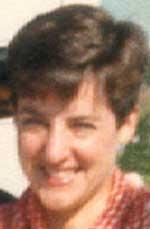
- Jun 16, 2002, 06:03 AMToday's (16 June 2002) Miami Herald includes a lengthy article by Tim Johnson about Ana Belen Montes titled, "She led two lives -- dutiful analyst, and spy for Cuba." The article includes what seems to be the first published photograph of the confessed spy who beat the polygraph:
Posted by George W. Maschke
- Mar 26, 2002, 04:03 PMI just had a pleasant conversation with LCDR Brooks, who was able to answer a few questions about the Montes case. First, he was able to confirm that Montes' duty position as a DIA analyst was indeed one which was subject to aperiodic counterintelligence-scope polygraph screening. With regard to why he cannot say on the record whether Montes was polygraphed, he said it's for the same reasons that he cannot talk about an employee's medical records. The relevant law then would be the Privacy Act, I suppose, and not DoD Directive No. 5210.48.
We briefly discussed polygraph policy, and he suggested that it might be argued that DoD polygraph examiners are more limited than law enforcement officers in the scope of the questions that they can ask a DoD employee, and that this might be responsible for any failure of the polygraph. Those were not his exact words, but this portion of our discussion might have been a tacit acknowledgement that Montes had indeed been administered and passed a CI-scope polygraph examination while at DIA.
Another question LCDR Brooks was able to answer was whether DIA would be conducting a written review of the Montes case, and whether an unclassified copy might be made public. He confirmed that even now, DIA is conducting an internal review of Montes' work ("scrubbing it" was the figure of speech he used). He anticipated that Congress would want a report, and that it would get one, although it would likely come from DoD and not directly from DIA. He also anticipated that DIA would be making some kind of public informational release on the Montes case after her sentencing on 24 September.
We briefly discussed polygraph policy, and he suggested that it might be argued that DoD polygraph examiners are more limited than law enforcement officers in the scope of the questions that they can ask a DoD employee, and that this might be responsible for any failure of the polygraph. Those were not his exact words, but this portion of our discussion might have been a tacit acknowledgement that Montes had indeed been administered and passed a CI-scope polygraph examination while at DIA.
Another question LCDR Brooks was able to answer was whether DIA would be conducting a written review of the Montes case, and whether an unclassified copy might be made public. He confirmed that even now, DIA is conducting an internal review of Montes' work ("scrubbing it" was the figure of speech he used). He anticipated that Congress would want a report, and that it would get one, although it would likely come from DoD and not directly from DIA. He also anticipated that DIA would be making some kind of public informational release on the Montes case after her sentencing on 24 September.
Posted by George W. Maschke
- Mar 22, 2002, 06:56 PMbeech trees,
I left a message for LCDR Brooks asking essentially that question, but have not yet received a call back or e-mail.
Quote"Sir, would you mind quoting which passage of the DIA Polygraph Policy precludes you from discussing whether or not Ms. Montes was ever polygraphed while an employee of the DIA?"
I left a message for LCDR Brooks asking essentially that question, but have not yet received a call back or e-mail.
Posted by beech trees
- Mar 22, 2002, 06:53 PMQuote from: George W. Maschke on Mar 22, 2002, 05:43 PM
I just got off the phone with LCDR Brooks at DIA Public Affairs (tel. 703-697-2919).
He told me that the Defense Department's polygraph policy, which is contained in Directive Number 5210.48 prevents him from disclosing whether Montes was ever polygraphed while employed by DIA, even after her guilty plea.
However, upon reviewing said regulation, I found nothing that would preclude DoD from disclosing whether an employee had been polygraphed (or indeed, the results). I'll call back for clarification.
"Sir, would you mind quoting which passage of the DIA Polygraph Policy precludes you from discussing whether or not Ms. Montes was ever polygraphed while an employee of the DIA?"
Let the cover-up begin.....